Version 2026.3
Thank you for updating Remote Desktop Manager (RDM) to version 2026.3!
Below, we'll take a quick look at the most exciting updates. For the full list of changes, check out the release notes.
Manage Devolutions Cloud users in RDM
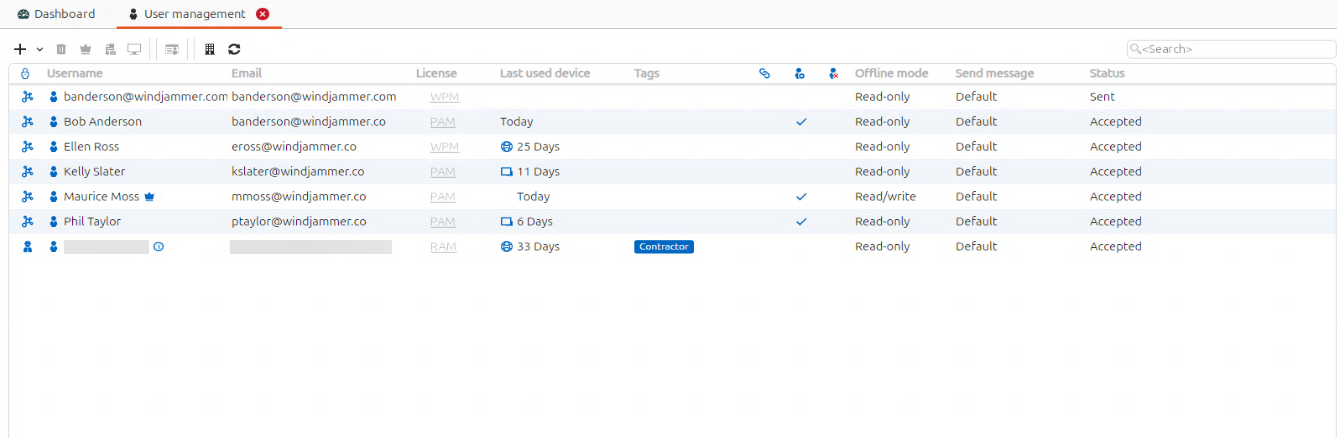
You can now manage Devolutions Cloud users in Devolutions Remote Desktop Manager (RDM), instead of the Devolutions Cloud web interface. You can search for and filter users, add users, administrators, or contractors, and send or resend invitations. You can also view licenses, user groups, registered devices, and user activity.
Manage Devolutions Cloud system settings in RDM
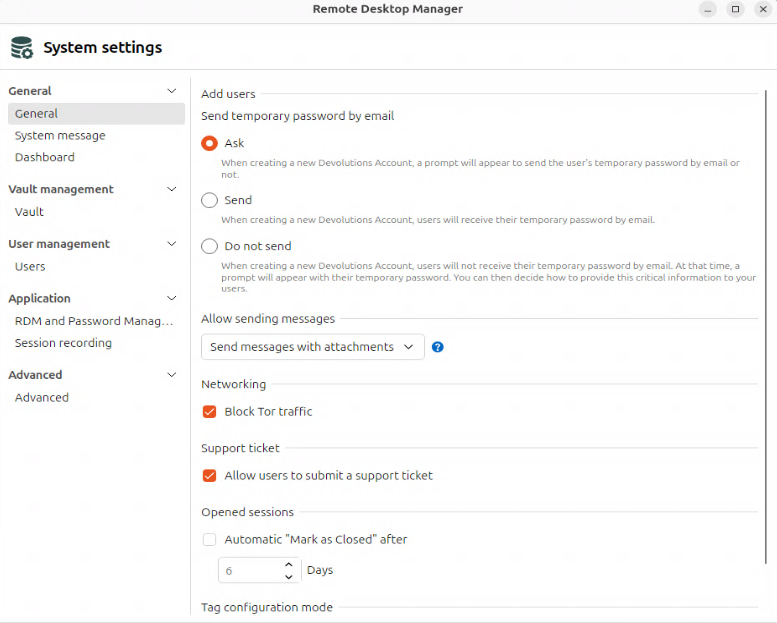
You can now manage the supported Devolutions Cloud system settings in RDM, instead of the Devolutions Cloud web interface. RDM could already manage system settings for SQL Server and Devolutions Server workspaces.
Create multiple forbidden password lists
Each list has its own match mode (Exact or Contains) and its own case-sensitivity setting. With the Forbidden password check on in Password Validation, a password that matches any list is refused before you save it.
These lists replace the single forbidden-password field. An import containing forbidden passwords still completes. The warning lists each affected entry and the rule it matched, with a link to the Entry Security Analyzer.
Store PAM credentials in shared vaults
You can now store Devolutions PAM credentials in a regular shared vault, alongside standard entries. A vault must be at the High security level before it can hold PAM accounts. A vault at Standard refuses a PAM entry and asks an administrator to convert the vault first. High-security vaults are not available offline, and a vault that holds PAM accounts cannot return to Standard until you move or delete those accounts.
Create a vault from a template
When you create a vault, you can select a vault template to copy its folders and entries with their nesting. In RDM on Linux, templates are available when you create a vault for a Devolutions Server workspace.
Extend active PAM checkouts
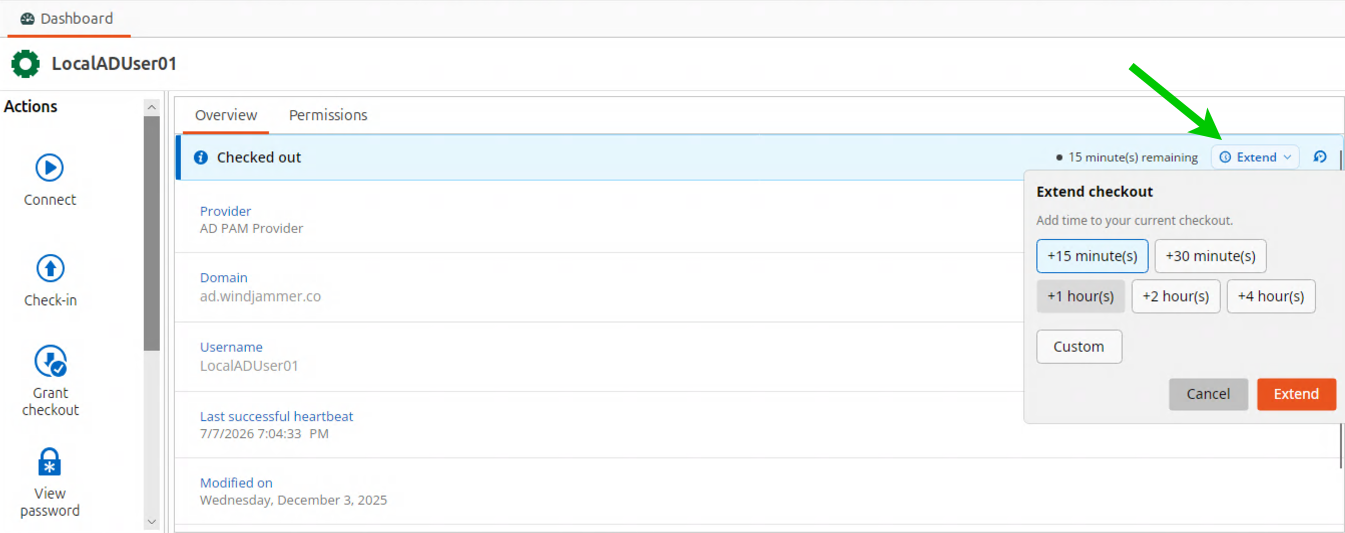
You can now request more time on an active PAM checkout, instead of checking the credential in and starting a new request. Extensions are off by default. The checkout policy controls whether extensions are available, whether approval is required, and the maximum extension duration.
Manage PAM provider credentials with self-rotation
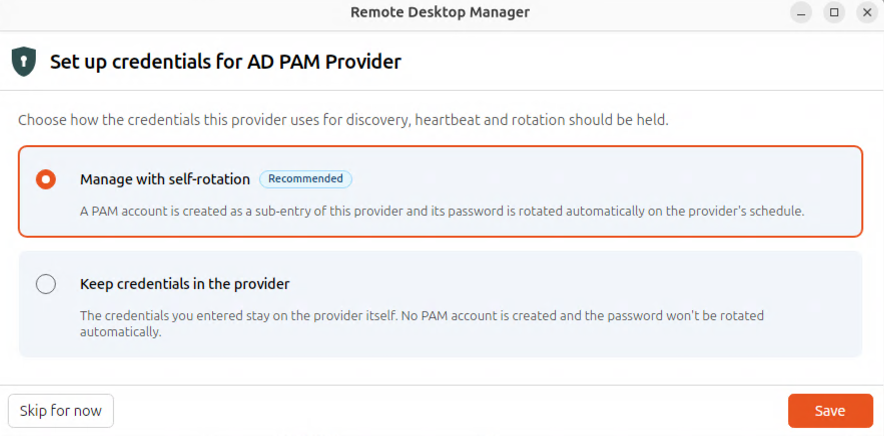
A PAM provider signs in with its own account to run discovery, heartbeat, and password rotation. When you save a provider, you can now choose Manage with self-rotation, Keep credentials in the provider, or Skip for now. You can also convert an existing provider to a Managed PAM account. The managed account appears under the provider and follows the provider's rotation schedule.