








 Patrick Pilotte
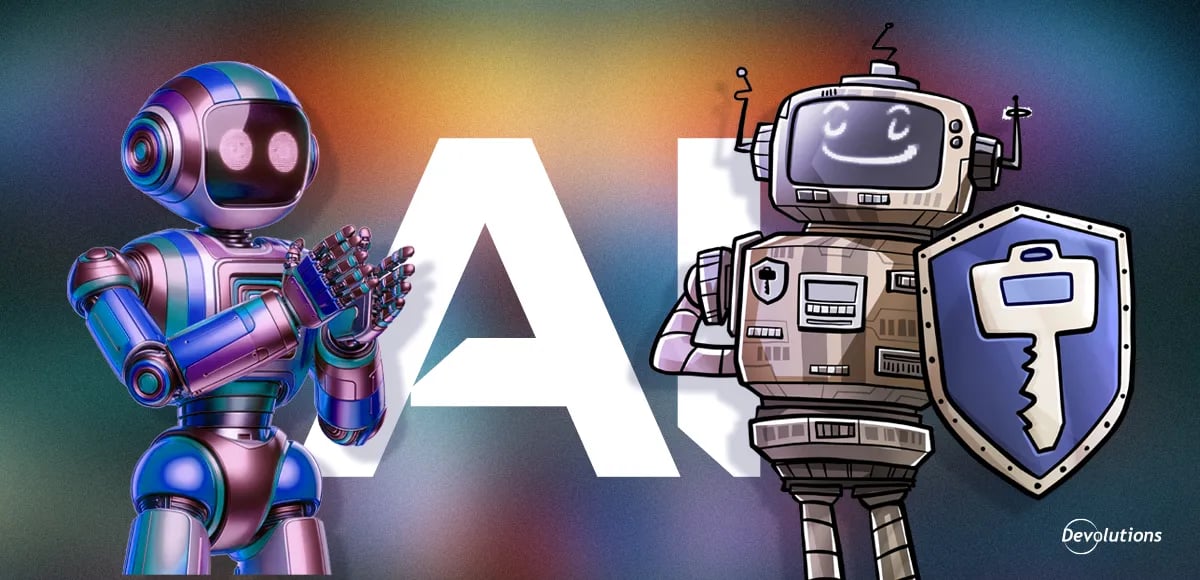
Artificial intelligence is no longer an emerging concept in cybersecurity; it is an operational reality. By 2026, AI will be deeply embedded in both attack strategies and defensive operations.
The question is no longer whether AI will influence cybersecurity, but rather: who will leverage it more effectively attackers or defenders?
Offensive AI: Speed, scale, and precision
Cybercriminals have quickly understood the value of AI. It lowers technical barriers and dramatically increases the scale of operations.
In 2026, offensive AI will primarily be used to:
- Enhance social engineering
AI-generated phishing emails, deepfake voice messages, and synthetic identities are becoming increasingly convincing. Personalized attacks can now be generated in seconds using publicly available data.
- Automate reconnaissance
AI can analyze exposed assets, map infrastructures, and identify potential weaknesses faster than traditional manual methods.
- Optimize exploitation
Attackers can use AI-assisted scripts to adapt payloads dynamically, bypass certain defenses, and test multiple attack paths simultaneously.
The advantage of offensive AI lies in its speed and scalability. It allows threat actors to conduct more campaigns, with fewer resources, and often with higher success rates.
Defensive AI: Reducing noise and increasing visibility
On the defensive side, AI is becoming essential for handling the overwhelming volume of security data generated daily.
In 2026, defensive AI will play a key role in:
- Alert prioritization
Machine learning models can help identify anomalies, correlate events, and highlight the most critical incidents among thousands of alerts.
- Behavioral analysis
AI can detect unusual access patterns, privilege escalations, or lateral movement attempts based on deviations from normal behavior.
- Accelerated incident response
Automation combined with AI enables faster containment actions, such as isolating systems or revoking compromised credentials in near real time.
The strength of defensive AI is its ability to reduce cognitive overload and support more informed decision-making.
The real battleground: Identity and privilege
While AI evolves rapidly, one reality remains constant: most successful attacks still involve compromised credentials or abused privileges.
Whether enhanced by AI or not, attackers ultimately aim to gain access.
This is where defensive strategies must mature. AI-driven monitoring is powerful, but without strong identity and privileged access controls, detection alone is not enough.
Go deeper: The network perimeter is gone — identity is the new frontline. Discover how SMBs can strengthen access controls and build a resilient security posture, even with limited resources.
By 2026, organizations that combine:
- Intelligent threat detection
- Centralized identity governance
- Strict privileged access management (PAM)
- Clear audit trails
will significantly reduce the impact of AI-driven attacks.
Who has the advantage?
The short answer: it depends on operational maturity.
Attackers benefit from agility and fewer constraints. They can experiment rapidly and exploit automation without regulatory or governance limitations.
Defenders, however, hold a structural advantage they control the environment. When supported by strong visibility over identities, controlled privilege escalation, and integrated security workflows, defensive AI becomes a force multiplier.
AI alone does not determine the outcome. Process, visibility, and access control do.
Strategic considerations for 2026
To remain competitive against AI-driven threats, SecOps teams should focus on:
- Strengthening identity-centric security models
- Consolidating visibility over privileged access
- Integrating AI capabilities into existing workflows, not layering them blindly
- Regularly testing incident response scenarios involving AI-assisted attacks
Organizations that align AI capabilities with disciplined access management will be far better positioned than those relying solely on detection technologies.
Read more: Knowing who can become privileged is only half the battle. Learn how combining PIM and PAM turns elevated access into short, auditable, and fully governed events.
Conclusion
In 2026, the advantage will not belong exclusively to offensive or defensive AI. It will belong to organizations that combine intelligent automation with strong governance over identity and privilege.
AI may accelerate both attacks and defenses but control over access remains the decisive factor.
The future of cybersecurity will not be defined by who uses AI first, but by who integrates it most strategically.
See the data: 71% of SMBs feel confident handling a cyber incident — yet only 22% have an advanced security posture. Our survey reveals the real gaps in PAM adoption, AI readiness, and incident response that attackers are already exploiting.
 Vincent Lambert